




Flavor profile
Bronzed and creamy like the Caribbean- Crema
- Aroma
- Sweetness
- Smoothness
- Body
- Acidity
- Lasting
The Blend
Cuban coffee is a method before it is an origin. The beans are selected each year from established growing regions across Central and South America, East Africa and Southeast Asia, and what makes the cup Cuban is what happens after: a dark espresso roast, a fine grind, sugar whipped into the first drops. Café Real is built for that method rather than adapted to it.
Arabica and Robusta are asked for different things. Arabica carries the aroma and the sweetness. Robusta carries the weight and the dense crema a colada is judged on, and on its own would turn the cup harsh. The proportion between them is the formula, and the dark roast is the other half of it.
That roast is what draws out the oils behind the body, and why the profile above sits where it does: crema and body at the top of the scale, acidity held low. There are no added flavors. The sweetness you taste is in the bean, and the roast is what brings it forward.
Brewing
Grinding. Whole bean, so the grind is yours. Cafecito and espresso want it fine, fine enough that a shot takes 25 to 30 seconds. The cafetera wants a step coarser and no tamping. Drip wants coarser again.
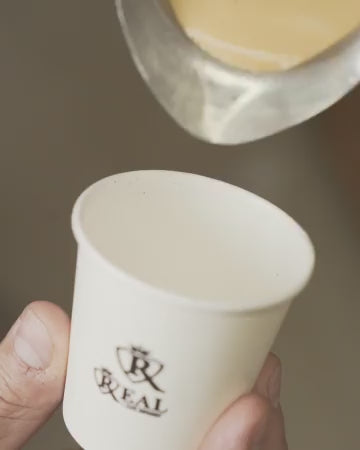
Cafecito. Two spoons of sugar in the serving cup. When the first dark drops come through, pour them over the sugar and whip until pale and creamy, then pour the rest through that espuma. It is the difference between a cafecito and a small dark coffee.
Colada and cortadito. A colada is the same coffee in a six or nine-cup pot, handed round in thimbles. A cortadito is a cafecito cut with roughly its own volume of hot milk.
Espresso machine. Start at an 18 g dose and pull about 36 g in 25 to 30 seconds. Running fast and tasting thin means grind finer; choking the machine means coarser.

The Pour

The Ritual

The Pause

The Share